
How ice showers work
Why Ice Shower Coverage Matters
Coverage matters because it determines which parts of your body the cold water reaches at once. A low temperature can still come through a narrow stream, while a wide spray can have gaps or send water past you. Judge the distribution at your standing position alongside temperature and flow.
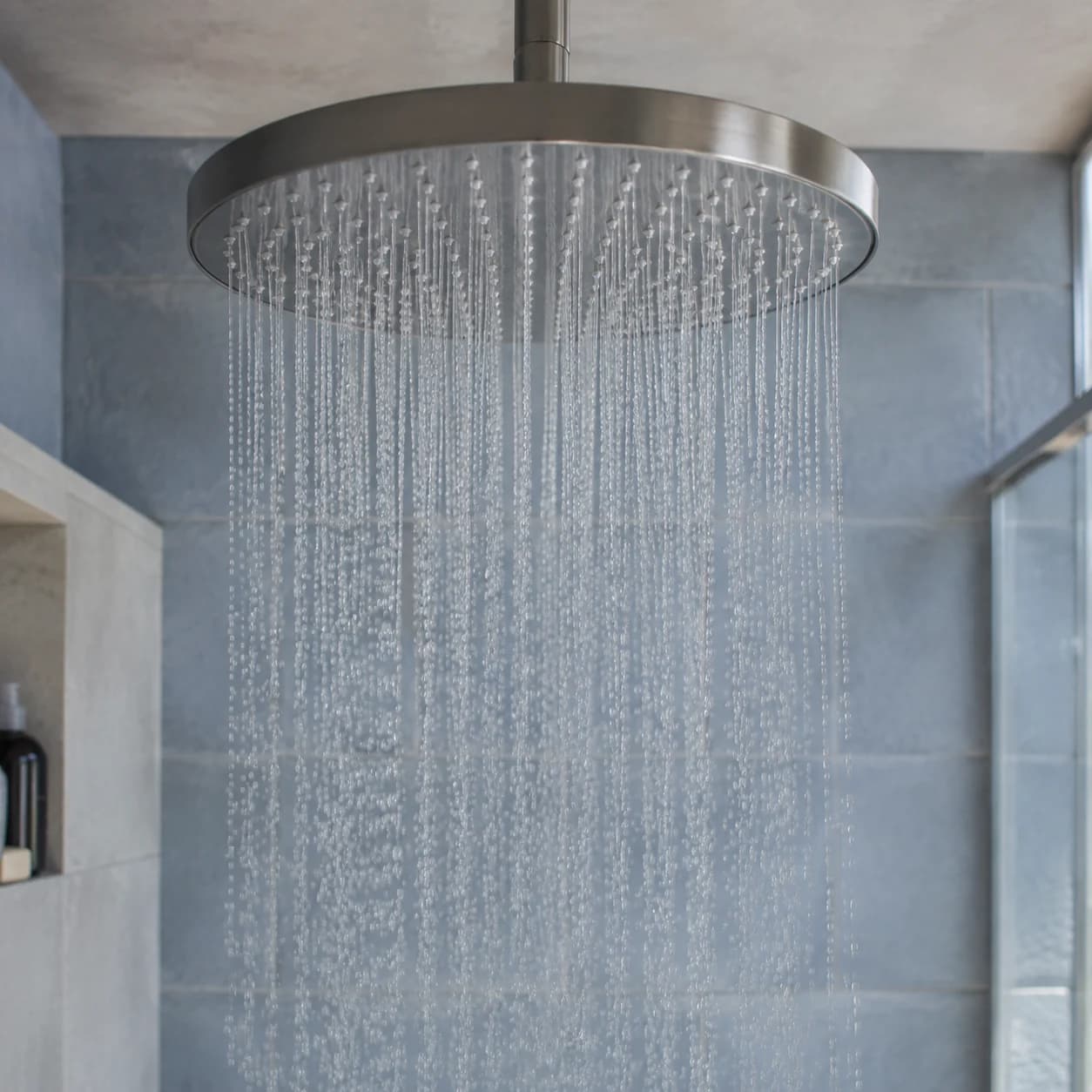
At a glance
Where water reaches
Look at the areas receiving the spray at your standing position, including the gaps between streams.
How it is distributed
The same total flow can be concentrated in one place or spread across a wider area.
How the system performs
Check the pattern with the intended head, flow setting and cooling system working together.
In this guide
Coverage means where the water actually reaches
For an ice shower, coverage is the spread and distribution of water across the body. It includes the areas receiving the spray, the gaps between streams and how that pattern changes when you stand beneath it.
A product photo can show a large shower head without showing any of those things. The faceplate might be wide while the jets converge below it. A spray might also spread beyond the shoulders and send a substantial part of its water straight to the floor.
Direct spray and runoff are different too. Water running down from the shoulders can wet other areas, but that does not mean those areas receive the same steady stream as the point directly beneath a nozzle.
That is why coverage belongs in the explanation of how an ice shower works. The cooling unit prepares the water; the head and its position determine how that water reaches you.
Temperature, flow and coverage answer different questions
These three properties describe different parts of water delivery. A strong result in one does not tell you the others.
- Temperature
- How cold is the delivered water, and does it stay at that temperature while the shower runs? A tank reading alone does not answer what reaches the outlet.
- Flow
- How much water reaches the head per minute? Use the actual operating flow, not just a pump's maximum rating or a figure from a different mode.
- Coverage
- Where does that water land at the intended standing position? Look at the distribution across the areas you want to reach, not just the outside edge of the spray.
Spray force is another separate property. A concentrated jet may feel forceful while reaching a small area. A softer overhead pattern may reach a wider area without the same sensation of pressure.
The US EPA's WaterSense showerhead guidance treats spray coverage, spray force and flow performance separately. It is a useful reference for shower delivery, not a certification of ice-shower cooling or health effects.
For a refrigerated system, ask whether the quoted temperature and flow apply together with the supplied head. A minimum temperature from one setting and maximum flow from another do not establish the combined performance.
A wider spray is not automatically more useful
A spray can become wider by spreading the same water further apart. That changes where the water goes without necessarily increasing how much comes out.
Concentrated distribution
Water lands in a narrower area, with the streams closer together.
Wider distribution
Water lands across a larger area, with more space between the streams.
If two showers each deliver 6 litres per minute, each uses 6 litres during a one-minute run. One can concentrate that volume into a small area while the other spreads it out. This is a flow example, not a suggested cold-exposure duration.
At unchanged total flow, spreading water across a larger area reduces the average volume delivered per unit area. Real sprays are not perfectly even, so a wide outer edge can hide a weak centre, gaps or a few concentrated streams.
The useful question is whether the distribution suits your body and standing position. Water that lands outside that area increases the apparent width without adding direct contact where you want it.
Look inside the outline. The width of the spray is only one part of coverage; check what happens between its edges.
The same head can look different in your bathroom
Mounting height and angle change the relationship between the head and the body. Depending on nozzle geometry, streams may spread, cross or remain roughly parallel as they travel. A pattern photographed close to the head may look different at shoulder height.
Body size and standing position matter as well. A fixed head has to work where the shower tray, screen and controls allow you to stand. Check whether you can move naturally without stepping over hoses or pushing against the enclosure.
The operating setup matters too. Changing the head, hose, flow setting or supply conditions can change the spray. A demonstration connected to household mains water does not by itself show how the same head will perform on a refrigerated system's pump.
Check these details alongside the bathroom installation requirements. A pattern that sends water beyond the tray or screen may be a poor match for that room.
If a previously even spray becomes patchy, inspect the head using its care instructions. Buildup or obstructed outlets can affect delivery; our ice shower maintenance guide explains what to look after without improvising changes to the equipment.
How to compare coverage before choosing a system
Ask for a demonstration of the complete setup at the height and settings you intend to use. An uncut view of the running spray is more informative than a close-up of the head or a still image of water droplets.
- Identify the operating setup. Confirm which cooling unit, head, mode and flow setting are shown. Check whether any quoted outlet temperature was measured during that same run.
- Look at the landing area. See where water reaches at a realistic standing distance. Note whether the centre, edges or particular areas receive most of the flow.
- Check gaps and overspray. Look for spaces between streams and water landing beyond the intended contact area. A broad spray silhouette can conceal both.
- Watch the pattern over time. Check for pulsing, interruptions or changing distribution once the system is running. If movement is needed, see how much and whether it suits your enclosure.
- Keep observations separate from measurements. A video can show distribution. It cannot establish the water temperature, total flow or a precise body-coverage percentage on its own.
A claimed coverage percentage needs a method: which body area or collection surface was counted, at what distance, with what flow and for how long? Without those details, the number is difficult to compare with another system.
EPA's explanation of WaterSense showerhead performance testing describes repeatable laboratory assessment of spray distribution. This article's illustration and checklist are practical explanations, not that test or evidence that a product passes it.
Coverage also has an evidence limit. A spray demonstration describes water delivery; it does not measure health outcomes. Wider coverage alone cannot establish a larger benefit, justify a longer or colder session, or show equivalence to immersion. Our guide to ice shower benefits and the research behind them explains the distinction.
Common questions about ice shower coverage
No. The faceplate size does not tell you the spray's shape or distribution at your body. Nozzle layout, operating flow, mounting height and angle all matter. A large head can have gaps or put water outside your standing area. Compare the running spray at the position you will actually use.
Not necessarily. Water use depends on the actual flow rate and how long the shower runs. Two heads with the same measured flow can distribute that water differently. Spreading the same volume over a larger area reduces the average amount per unit area, so check that the wider pattern still provides the delivery you want.
No. A concentrated jet can feel strong while reaching a small area. Coverage describes where water lands; spray force describes the push of that water. The supply pressure, head design and flow affect the result, but one figure does not describe all of them.
Moving changes which areas meet the water over time, and may make a narrow spray workable for you. It does not make that spray reach more areas at the same moment. Check whether the movement is comfortable and practical in the enclosure, with the hose and controls in place.
There is no universal coverage percentage that establishes the health benefit of an ice shower. Decide which areas you want the water to reach and assess the actual pattern. An overhead shower does not surround the body in the way immersion does, even when it wets several areas at once. A coverage demonstration cannot establish clinical benefits or a required exposure duration.
What useful coverage looks like
Useful coverage is a steady distribution of water across the areas you want to reach, at a position you can comfortably use. Assess it with the intended flow and delivered temperature, inside the bathroom where the system will operate.
When comparing ice shower systems for home, look beyond the head's size and the lowest temperature on the specification sheet. Ask to see where the water actually goes.
Ice showers
How Long Should an Ice Shower Be?
Put common cold-shower timings in context, account for temperature and coverage, and know when to end a session.

Ice showers
How Cold Should an Ice Shower Be?
Understand temperature settings, start gently and check the water at the shower head without chasing the lowest number.