
The ownership guide
Ice Shower Maintenance: How Much Work Is It?
Expect routine checks around use, refills if the system has a manual reservoir, and periodic cleaning of the tank, shower head and cooling equipment. A mains-connected system removes manual top-ups, but it still needs upkeep. The workload depends on the design, water quality and how easy the parts are to reach.
At a glance
Around each use
Check the setup and water supply. Refillable systems need top-ups; ice attachments need fresh ice.
At cleaning time
Allow for the tank, shower head, water path and cooling equipment, following the model's care schedule.
Before buying
Find out which jobs you do, which need a technician and how easily you can reach the parts.
In this guide
The type of system changes the work
A refrigerated ice shower actively chills its water. That adds a cooling unit and water path to look after alongside the normal bathroom. How the system receives its water determines much of the preparation.
It helps to separate hands-on work from waiting time. Filling a reservoir is a task you do. Waiting for that water to chill affects when you can shower, but it is not time spent cleaning or servicing the machine.
Compare the jobs, not just the claim of easy maintenance. Scroll sideways if needed.
| Setup | Hands-on preparation | Ongoing care | Waiting time |
|---|---|---|---|
| Refillable refrigerated system | Fill or top up the reservoir and check the setup | Reservoir, head, hoses and cooling-unit care; any fitted filters | Initial chilling and recovery after adding water |
| Mains-connected refrigerated system | Check the setup; water supply is automatic | Water path, connections, head and cooling-unit care; any fitted filters | Initial chilling and recovery between uses |
| Ice-filled attachment | Make or obtain ice, load the device and check the mount | Clean the ice container and outlet; inspect straps or fittings | Freezing the next batch of ice |
An ice-filled attachment is included because it often appears in the same search. It uses stored ice rather than active refrigeration, so it trades cooling-unit care for repeated ice preparation.
Format examples: Olsek's published FAQ describes a refillable reservoir and cooling after top-ups. iCoolsport's Ice Shower 10 listing describes automatic refill and re-chilling. Neither feature establishes a universal maintenance time.
What do you do around each use?
For a refillable unit, the repeat job is managing the water level. Fill it with the water specified by the manufacturer and allow it to reach the intended temperature. Plan the next top-up around the following session rather than discovering an empty reservoir when you want to use it.
The physical arrangement affects the effort. A filling point within easy reach is a different ownership experience from a tank that requires moving the unit or carrying water across the bathroom. That is worth checking during installation planning.
- Look over the setup. Check accessible hoses, mounts and connections for leaks, damage or movement.
- Check the water supply. Use the specified fill level or operating checks for the system. Do not run a pump without the required water.
- Keep the area usable. Leave the drain clear and the unit's ventilation space free of towels, bottles and other bathroom items.
These are observation and preparation tasks, not a reason to open the cooling unit before every shower. A visible leak, damaged cable or repeated fault needs attention before continued use; repeatedly restarting the unit is not maintenance.
What needs periodic cleaning?
The water-contact parts and the cooling equipment do different jobs, so they need different care. Cleaning the bathroom around the unit does not necessarily clean its reservoir, hoses or internal components.
- Reservoir
- Follow the draining, cleaning and rinsing procedure for the tank. Check how you reach its surfaces and remove debris. Adding fresh water is not the same job as cleaning the container.
- Head and hose
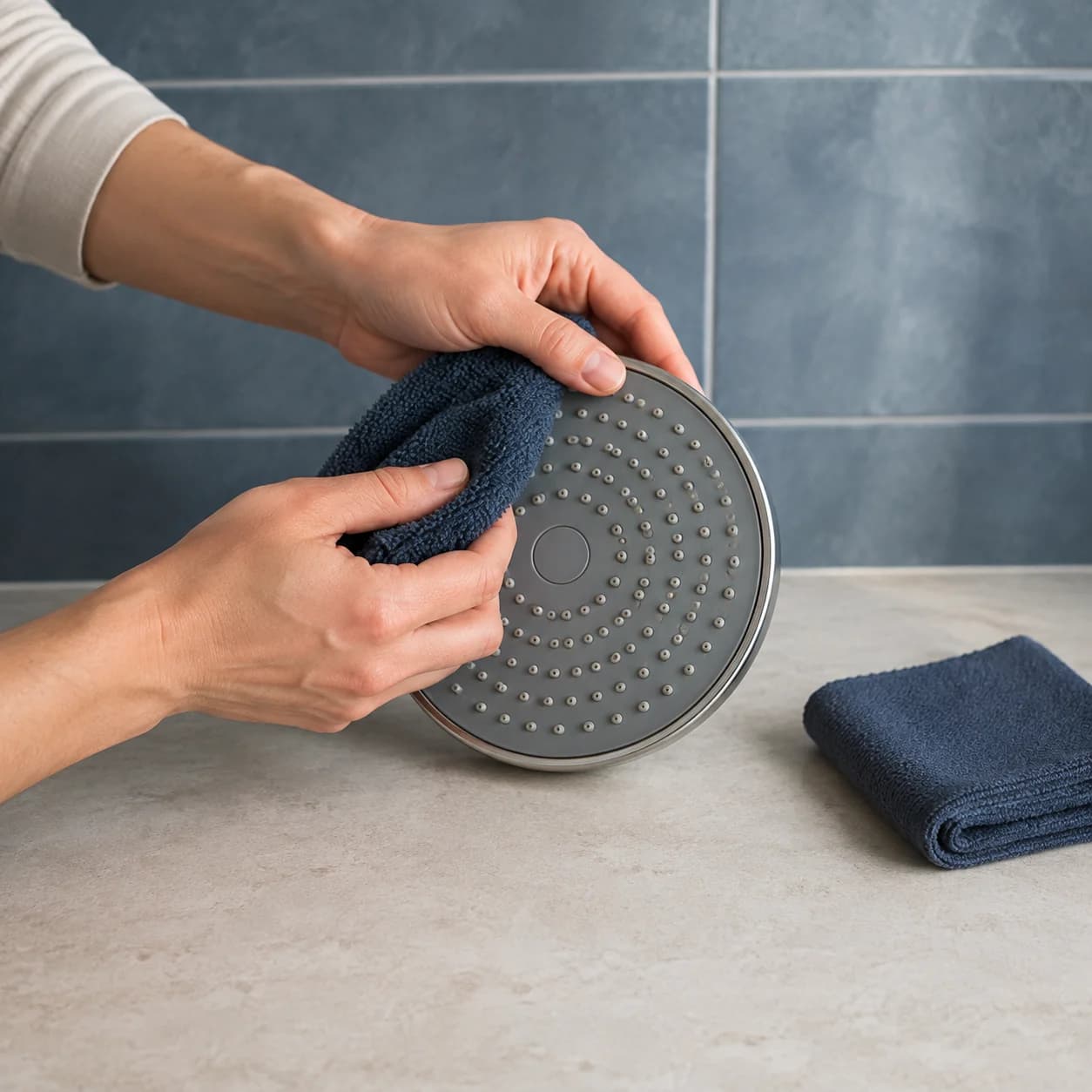
- Look for visible buildup and changes in the spray. Use the approved cleaning or descaling method for the head, seals and hose materials. Avoid forcing tools into nozzles or soaking parts in an unapproved cleaner.
- Casing and controls
- Use the method specified for each finish and display. A cleaner suitable for the casing may not be suitable for the screen. Keep cleaning water away from electrical parts.
- Airflow and cooling
- Keep the external air openings unobstructed. Internal condenser cleaning is a separate task: establish whether it is owner maintenance or a service job before removing covers.
As one concrete example, iCoolsport's Series 1 manual includes care for the casing, tank and condenser, alongside filter inspection. It also calls for power isolation before servicing and qualified trades for relevant work. Those instructions show why “automatic” describes operation, not the absence of upkeep.
Source: iCoolsport Ice Shower Series 1 User Manual, version 1.0.1, sections 4.2 and 5. Its procedures are model-specific; this guide does not reproduce internal disassembly or repair instructions.
Use the prescribed intervals for each component, and deal with visible buildup rather than waiting for the next planned clean. The schedule can depend on the water supply, use and environment. A task described only as “regular” is worth clarifying with the manufacturer.
Water changes, filters and consumables
There are three separate questions: when to top up, when to replace stored water, and when to clean the system. A top-up answers the first. It does not automatically answer the other two.
A shower that sends used water to the drain has a different water circuit from a tub that recirculates bathing water. It still has surfaces that stay wet. A low temperature or clear-looking water is not a reason to skip the required care.
The CDC's guidance on preventing waterborne germs at home recommends following device-care instructions and cleaning showerheads when buildup is visible. That general guidance does not establish a water-change interval for a particular refrigerated shower.
Filters also need to be identified by their purpose. A screen that catches debris is not the same thing as a treatment system. iCoolsport's Series 1 manual, for example, describes two internal filters for small debris and inspection to decide whether cleaning or replacement is needed.
Before buying, ask which consumables the exact model uses, whether they are washable or replaceable, and what sets their service interval. Include approved cleaning products and any treatment components, if fitted. Keep their cost separate from electricity and water in your ice shower running-cost budget.
Get three clear instructions: how to refill, how to manage stored water and how to clean the parts it passes through.
What happens when you stop using it?
A holiday, house move or break from the routine can create a different maintenance job from daily use. Check the shutdown and restart procedure before leaving a reservoir unused.
The instructions should explain whether and how to drain, clean, dry or flush the relevant parts, and what to do with any filters. Do not assume that keeping a tank chilled indefinitely replaces that procedure, or that switching the power off is the complete storage process.
Before the next session, complete the specified restart checks and allow time for the water to chill again. If the unit has been transported, follow its handling and restart instructions too. A generic household tap-flushing routine should not be treated as a cleaning procedure for an entire refrigerated system.
It is also useful to distinguish planned care from a fault. New leaks, unusual smells or deposits, persistent low flow and cooling errors warrant investigation. Use the troubleshooting guidance or contact support; leave electrical and refrigeration repairs to qualified service personnel.
How do you judge the effort before buying?
Ask to see the maintenance procedure as well as the shower demonstration. The useful details are how much you have to move, what you need to disconnect, which parts are accessible and whether any task needs an appointment.
- List the routine tasks. Separate refilling and preparation from cleaning, consumables and servicing.
- Attach the stated interval. Record whether each task is due by elapsed time, usage, an indicator or inspection. If the instruction is unclear, get a model-specific answer.
- Check access in your bathroom. Make sure the lid opens, the drain can be used and service areas can be reached in the proposed position.
- Identify who does the work. Distinguish owner care from jobs requiring a technician, and check local service availability.
There is no reliable single weekly time allowance across all these designs. For a unit you already own, record the time spent on actual refills and cleaning, plus the date and reason for each task. Keep unattended cooling time in a separate column. A representative week shows the routine work; add less frequent tasks from the manual so they do not disappear from the total.
This makes comparing home ice shower systems more practical. A system with fewer manual refills may still have a more involved cleaning procedure, while an accessible tank can make a repeated job easier.
Common maintenance questions
Use the cleaning and water-change intervals for the exact model. The tank, shower head, filters and cooling equipment may have different requirements. Visible buildup needs attention, but waiting for visible dirt is not a substitute for scheduled care. If the instructions do not give a clear schedule, ask the manufacturer for one before relying on a generic weekly or monthly rule.
Only use a product and method the manufacturer approves for the part being cleaned. A cleaner suitable for bathroom tiles may not be suitable for a reservoir, seals, coated metal or a pump. Do not add household cleaners to the water circuit as an experiment, and never mix cleaning products. Follow the specified rinsing procedure before using the shower again.
Some systems support continuous operation to keep water ready, but this is model-specific. Follow the operating and water-care instructions together. Keeping the water chilled does not replace cleaning or required water changes. A longer break may need a different shutdown and restart procedure from the one used between daily sessions.
Not every system has the same filters. Some have washable screens; others may use replaceable cartridges or additional treatment components. Ask what is fitted, what needs replacing and how its replacement interval is decided. A washable part can still wear out, so check availability as well as the initial consumables list.
It depends on the two setups. A shower that sends used water to the drain does not reuse the same bathing water in the way a recirculating tub does, but its reservoir, water path and cooling equipment still need care. Compare the actual filling, cleaning, water-treatment and servicing tasks for the models, rather than assuming the smaller water volume settles the question.
What should you expect day to day?
Expect a routine of checking the setup, managing the water and carrying out the prescribed cleaning. A refillable model adds top-ups; a mains-fed model takes over that part. Both still need attention to the water path and cooling equipment.
The most manageable system is one whose jobs are clear and whose parts you can reach. Before choosing, make sure you understand the full care routine and can carry it out in the bathroom where the unit will live.
Ice showers
How Long Should an Ice Shower Be?
Put common cold-shower timings in context, account for temperature and coverage, and know when to end a session.
Ice showers
How Cold Should an Ice Shower Be?
Understand temperature settings, start gently and check the water at the shower head without chasing the lowest number.