
The home guide
Best Ice Shower Systems for Home
The best ice shower system for home depends on the bathroom, the water connections and how often it will run. Compare what reaches the shower head, how much space the equipment needs and what you have to do before each use. The lowest temperature on the box is only part of the decision.
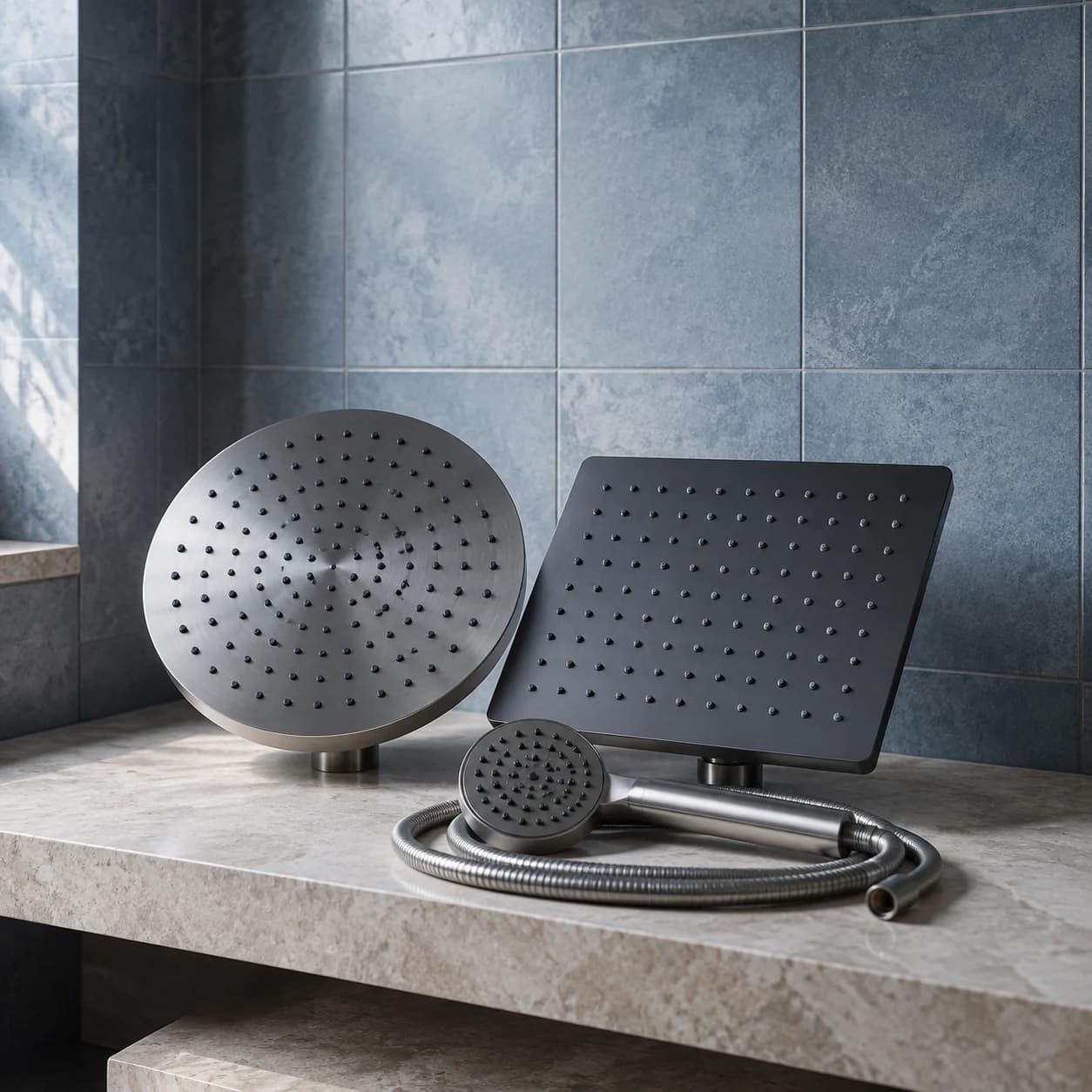
At a glance
An existing bathroom
A refillable system avoids a new water connection. Allow for cooling time and top-ups.
A dedicated installation
A mains-fed system can refill automatically, but needs more space and installation planning.
An occasional experiment
An ice-filled attachment means preparing ice and accepting a changing water temperature.
In this guide
Compare the systems, not just the temperature
A complete ice shower actively chills and controls its water. An ordinary cold shower uses the water available from the tap. A shower head on its own cannot add refrigeration, even if it is advertised with words such as “ice” or “cold”.
Home options fall into two refrigerated formats: refillable systems and mains-connected equipment. Passive ice attachments are included below because they often appear in the same search, but they work differently.
Compare the same requirements across each option. Scroll sideways if needed.
| What to compare | Refillable systemExample: Olsek Ice Shower | Mains-connected systemExample: iCoolsport Ice Shower 10 | Ice-filled attachmentPassive cooling device |
|---|---|---|---|
| Cooling | Active refrigeration | Active refrigeration | Stored ice; no active control |
| Temperature | 1°C–15°C, manufacturer stated | 4°C–10°C, manufacturer stated | Varies with ice, incoming water and flow |
| Water supply | Refillable 15 L reservoir | Mains connection; automatic refill | Load the attachment with ice |
| Delivery | Supplied Halo head; up to 7 L/min | Separate / existing shower head | Depends on the device |
| Unit size | 55 × 41 × 29 cm | Listing: 65 × 54 × 96.5 cm (L × W × H); confirm model revision | No refrigerated cooling unit |
| Installation | Mount, power and drainage; no mains-water connection | Water connection, outlet routing, power and ventilation | Check mounting and shower compatibility |
| Preparation | Pre-chill and refill | Pre-chill; automatic re-chilling | Freeze, load and replace ice |
Sources: Olsek published specifications and setup FAQ; iCoolsport Ice Shower 10 product listing and Series 1 User Manual, version 1.0.1. Figures are manufacturer stated. This is a specification comparison, not a hands-on product test.
Refillable systems for an existing bathroom
A refillable system makes sense when you want dedicated cooling without adding a mains-water connection. It stores and chills its own water, then sends that water to the shower head. Used water drains through the bathroom's existing drain.
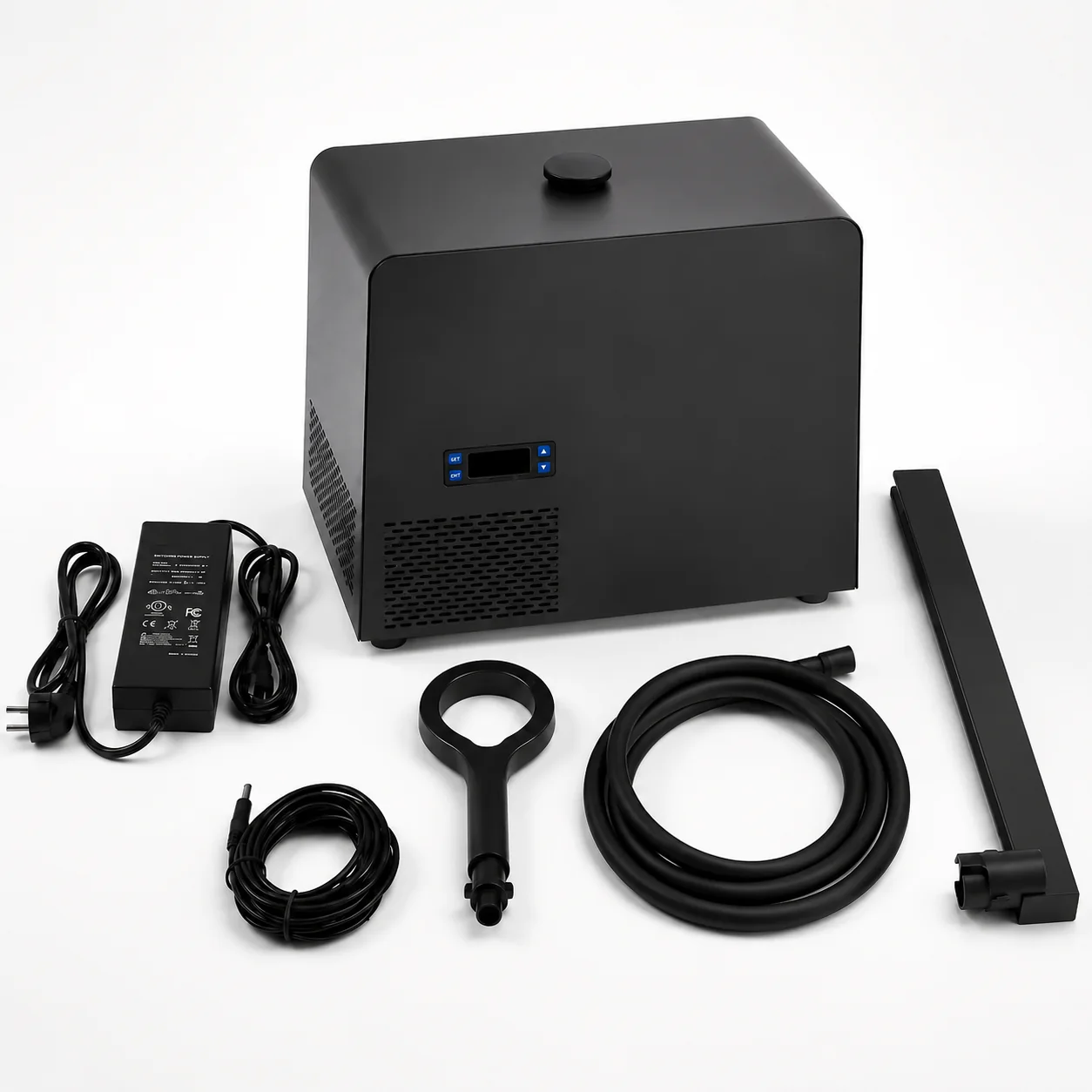
Olsek is one example of this format. Its published kit includes the cooling unit, Halo, adjustable mount, hose and power equipment. The manufacturer describes a no-drill setup with power connected outside the wet area. The complete arrangement still needs to suit the wall surface, drain and available space.
The trade-off is preparation. Olsek advises chilling the first fill overnight, while top-ups can take a few hours depending on the added water. A refillable system is therefore worth comparing for a planned daily session; check recovery time carefully if several people want to use it close together.
The deciding question: does refilling and pre-chilling fit the routine better than installing a water connection?
Mains-connected systems need more planning
A mains-connected ice shower needs a water supply and a route from the cooling equipment to the shower head. This can reduce manual refilling, but it adds connections, hose or pipe routing, and space requirements to the installation.
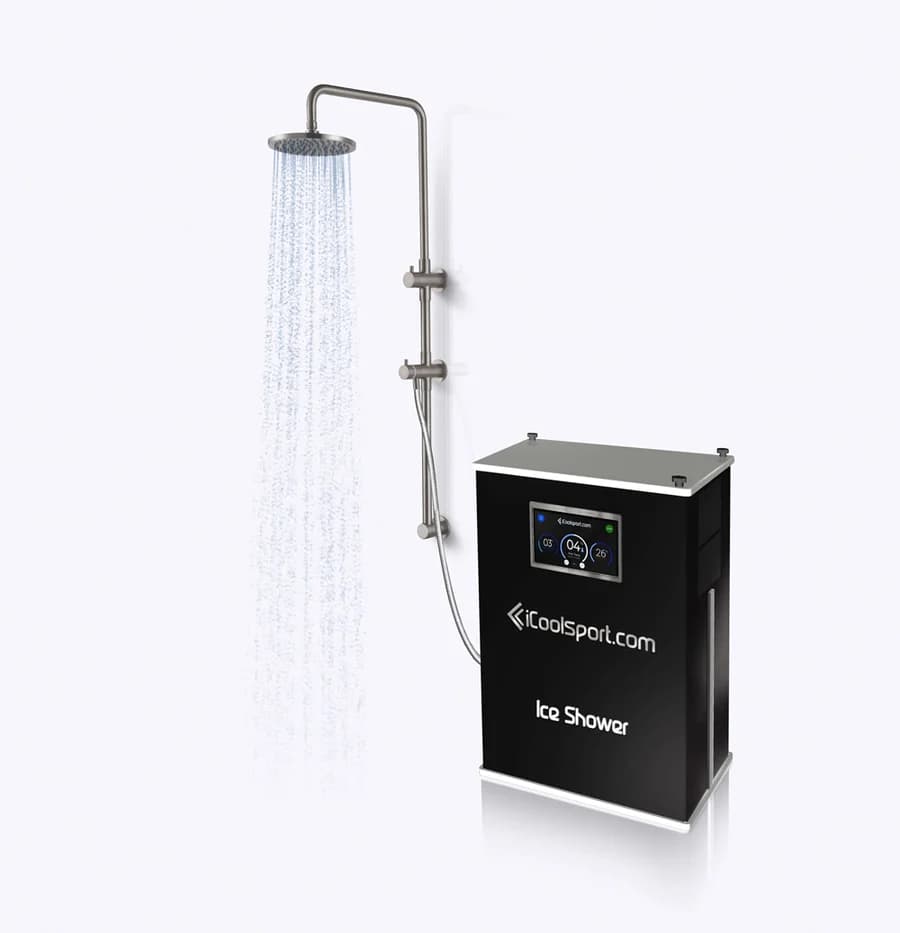
iCoolsport markets the Ice Shower 10 for home and light commercial use, with automatic refilling and up to 10 showers per hour. That throughput is a manufacturer claim and needs to be checked against the intended shower duration and operating conditions.
The manufacturer describes standard hose connections, so the amount of plumbing work depends on what is already available. Its product listing and linked Series 1 manual give different cabinet dimensions and ventilation clearances. Get the installation sheet for the exact model being supplied before deciding where it can go.
The deciding question: is there room for the cooling unit, its required clearances and the water connections without making the bathroom awkward to use?
What an ice-filled attachment can and cannot do
An ice-filled attachment cools water using the ice you load into it. It has no refrigeration system to replace that cooling as the ice melts, and no controlled temperature setting.
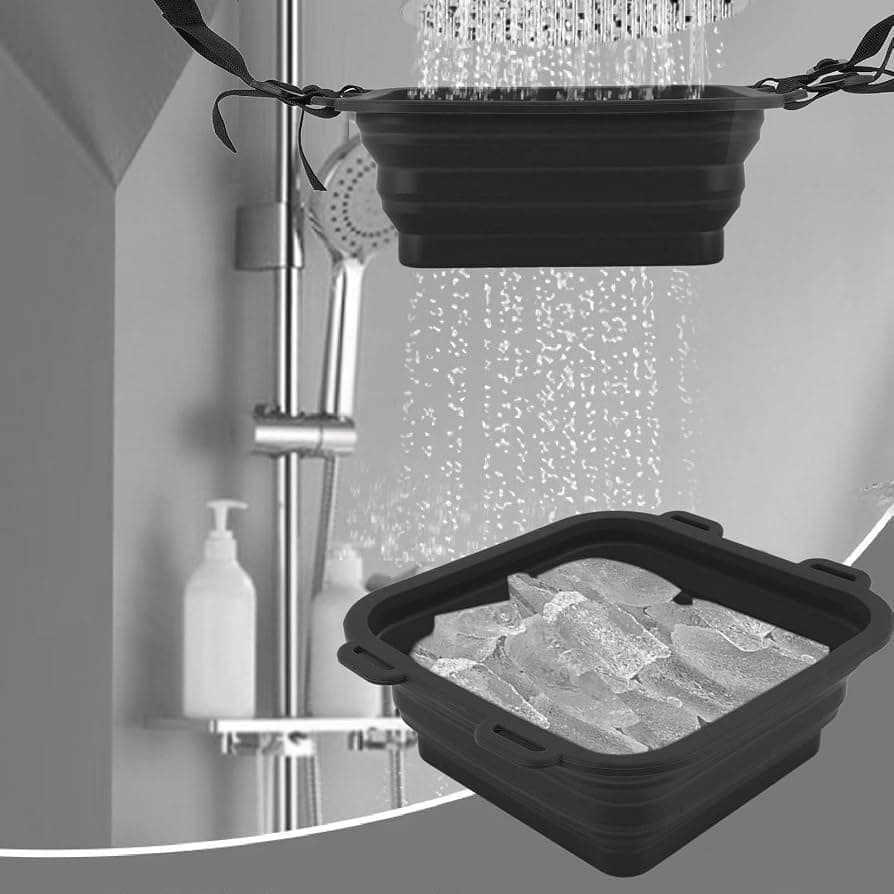
How cold the outlet gets depends on the amount of ice, the incoming temperature and the flow. A faster stream gives the same ice more water to cool. Reducing flow may improve cooling, but it changes the shower experience too.
This format suits experimentation if you accept the preparation and variability. It does not solve the problem of having to handle ice, and it cannot be judged by the temperature of the ice alone. We have not tested the pictured device or assigned it an outlet-temperature rating.
Judge the cold while the water is flowing
The useful comparison is temperature × flow × coverage. A reservoir reading describes only part of the experience. Ask what reaches the body once the shower is running.
- Temperature at the outlet
- Ask where the reading is taken and whether it remains stable over the intended session. A minimum tank temperature is not automatically the temperature at the shower head.
- Flow at that temperature
- Compare the delivered litres per minute using the supplied head. Maximum flow and minimum temperature are not automatically a verified simultaneous result.
- Coverage across the body
- Look for a demonstration of the actual spray. A narrow jet and an overhead pattern can use similar volumes while reaching different areas. Judge the head and cooling unit together.
If you are unsure what extra cooling would change, check your current shower temperature. That gives the comparison a starting point beyond how cold the water feels.
For a closer look at the spray itself, read why ice shower coverage matters and how to judge it at your standing position.
Check the bathroom before choosing the equipment
A system fits when the equipment and a person can use the shower comfortably at the same time. The box dimensions are the beginning of that check.
- Floor space. Mark out the unit and ventilation clearances. Check that the shower door can open and there is enough standing room.
- Water route. Confirm whether the system is manually filled or mains-connected, and where used shower water drains.
- Mount and hose. Check the wall surface, mounting height and hose reach against the supplied instructions.
- Power arrangement. Confirm the correct regional supply and where each part of the power kit belongs. Follow the manufacturer's placement requirements.
- Access afterwards. Leave room to refill, clean and reach controls without moving the whole setup.
A useful installation drawing includes these clearances and connections as well as the product outline. If the only measurement available is the size of the cooling unit, ask for the rest before making a decision.
Work through the room in more detail with our guide to installing an ice shower in a normal bathroom.
Compare the installed cost and the daily work
Compare the complete system: cooling equipment, shower head, mounting, connections, delivery and any required trades. A kit can appear cheaper because part of the installation is missing from the price.
Water use, worked through
7 L/min × 0.5 min = 3.5 L
For illustration, a steady flow of 7 litres per minute uses 3.5 litres in 30 seconds. Two such sessions use 7 litres. This is arithmetic, not a measured product result or a recommended duration.
Electricity needs a separate calculation. Ask for measured consumption in kilowatt-hours over a stated routine and ambient temperature, then multiply by the local tariff. Cooling capacity and compressor horsepower are not a daily electricity bill.
Include the effort too: freezing ice, refilling a reservoir, waiting for the water to chill, cleaning and accessing the equipment. Confirm current regional prices, warranty coverage and return conditions, and get an itemised quote if extra installation work is required.
For published price examples and a worked breakdown of electricity and water, read how much an ice shower costs.
Common questions
No. A refillable ice shower can use its own reservoir and drain through the existing shower. A mains-connected system needs a water-supply connection and a route to its shower head. Check the installation manual before buying: the presence of a chiller alone does not tell you which connections your bathroom needs.
An ice shower can work in an apartment when the complete setup fits the bathroom. Check the cooling unit, ventilation space, shower-head mount, hose route, power arrangement and drainage. A refillable system avoids a mains-water connection, but a compact product still needs enough room for someone to stand and move comfortably.
A shower head without a cooling source cannot actively chill tap water. Changing the spray pattern changes how the water reaches the body. An ice-filled attachment adds a temporary cooling source, while a refrigerated ice shower uses powered cooling and temperature control. These are different products, even when their names sound similar.
Only if the equipment is explicitly designed and supported for that shower arrangement. A chiller sold for a plunge is not automatically a complete ice shower. The water supply, pump, flow, controls, shower head and drainage still need to work together. Ask for a documented shower configuration instead of assuming compatible hose fittings are enough.
Compare measured electricity consumption, water use and required consumables over the same routine. For water, multiply litres per minute by the total minutes of showering. For electricity, multiply measured kilowatt-hours by the local tariff. A compressor's horsepower or advertised cooling capacity does not tell you its daily electricity consumption.
Which setup makes sense at home?
A refillable refrigerated system is worth comparing when an existing bathroom has no convenient extra water connection. A mains-connected system becomes more relevant when the space and installation can support repeated use. An ice-filled attachment remains an option for occasional experiments with a changing temperature.
The best ice shower systems for home combine usable cold with a setup that fits the room and routine. Compare the delivered water, draw out the installation, and account for the preparation before choosing a brand.

Ice showers
How Long Should an Ice Shower Be?
Put common cold-shower timings in context, account for temperature and coverage, and know when to end a session.
Ice showers
How Cold Should an Ice Shower Be?
Understand temperature settings, start gently and check the water at the shower head without chasing the lowest number.