
Installation guide
Can You Install an Ice Shower in a Normal Bathroom?
Yes, an ice shower can work in a normal bathroom without a full renovation. A refillable system may avoid new plumbing, while a mains-connected system needs a water connection. Either way, the room must accommodate the cooling unit, drainage, power and enough space to shower comfortably.
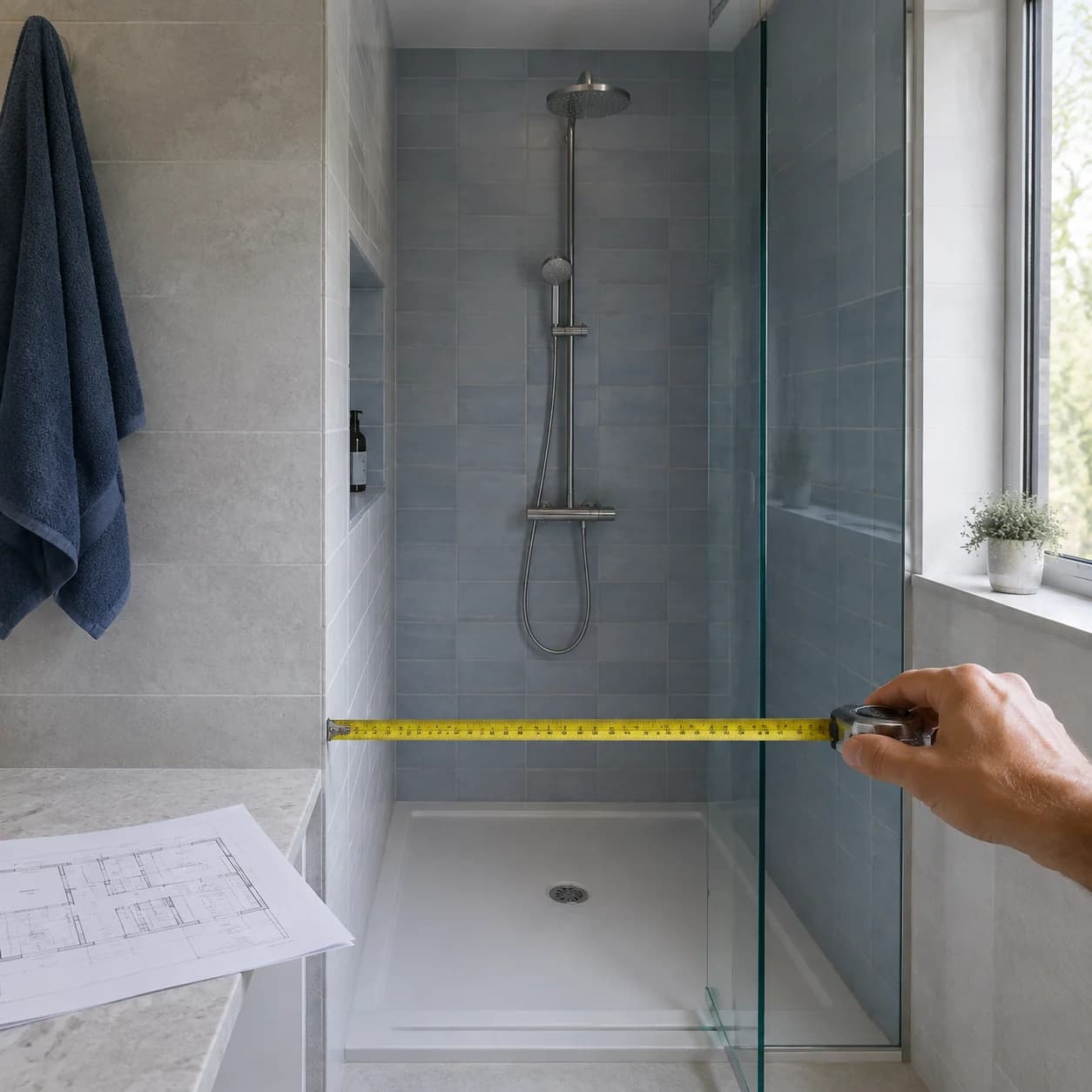
At a glance
The water connection
A refillable system stores its own water. A mains-fed system needs a supply connection.
The space around it
Allow for ventilation, door movement and standing room as well as the cooling unit.
The complete setup
Power, drainage, mounting and hose routes all need to suit the room and the chosen model.
In this guide
Can the bathroom stay as it is?
It can, if the equipment works with the space and services already there. You do not necessarily need to replace the shower tray, remove the hot-water mixer or build a dedicated room.
A complete ice shower chills and controls its water, so it needs cooling equipment somewhere. Changing the shower head alone will not make ordinary tap water colder. The main installation choice is how that cooling equipment receives its water.
- Refillable system
- You fill a reservoir, which chills the water and supplies the shower head. A suitable kit can leave the existing water supply untouched. You still need room to fill, cool and clean it.
- Mains-connected system
- The unit receives water from a supply connection and sends it to a shower outlet. How much work that takes depends on where the equipment sits and whether suitable connections already exist.
Examples of these formats: Olsek's published setup uses a refillable reservoir and the existing shower drain. iCoolsport's Ice Shower 10 listing describes a mains-water connection. These establish different installation approaches, not compatibility with every bathroom.
Choose the format before deciding whether you need a plumber. A product described as suitable for home use may still need new connections in your particular room.
Measure the space you can actually use
The cooling unit fitting through the door is only the first check. It also has to sit in an approved position while leaving enough room for someone to enter, stand, turn and leave the shower.
Mark the unit's footprint on the floor and add the ventilation clearances from its installation sheet. Then open the shower door fully. Check whether the proposed position blocks the drain, catches the door or forces the user to step over a hose.
- Width and depth
- Measure the available floor area with the door, screen and existing fittings in their normal positions. Include clearance around the unit, not just the casing.
- Height and reach
- Check the shower-head mounting height, the route back to the unit and access to the filling point. Use the manufacturer's permitted hose length and arrangement.
- Access and support
- Leave room to reach controls, clean the unit and service it. Check the filled weight and the required supporting surface, especially for placement inside a bath or on a shower tray.
A refrigerated unit also releases heat into its surroundings. An empty cupboard is not automatically a suitable hiding place: the model's ventilation requirements still apply. Do not assume a bathroom extractor alone provides the airflow the equipment needs.
Check access against the refilling, cleaning and maintenance jobs too. A unit that fits tightly may be awkward to look after.
A useful fit check: mark out the equipment and its clearances, then walk through the normal shower routine without stepping into that space.
Check where water comes from and where it goes
A refillable system avoids a permanent supply connection by storing its own water. That makes the filling route part of the setup: can you reach the reservoir easily, and can you refill it without moving a heavy unit each time?
A mains-connected system needs a suitable supply and a route from the cooling unit to the shower head. If those are missing, allow for plumbing work. A nearby tap does not by itself confirm the right pressure, fittings or isolation arrangements.
Keep the existing mixer and any electric shower separate unless the manufacturer provides a supported connection design. An ice shower is not a reason to improvise a connection into equipment intended to heat water.
For used shower water, an existing drain may be sufficient if it handles the intended flow. The spray must stay within the shower tray, bath or wet-room area. Include any separate draining or overflow requirements for the cooling unit, as well as water emptied during cleaning.
If the current shower already pools water or drains slowly, resolve that first. A new cooling system will not correct a drainage problem.
Installation reference: iCoolsport Series 1 User Manual, version 1.0.1, sections 2.3–2.4. Check the supplied model's instructions for connections, clearances and any work requiring a qualified installer.
Plan the power arrangement before placement
Bathroom suitability applies to the complete electrical setup. The cooling unit, power supply, connectors and controls may have different placement requirements. A splash-resistant casing does not make every part suitable for the same position.
Use the manufacturer's supplied arrangement and confirm that it suits the electrical requirements where you live. If a suitable power supply is not available, have a qualified electrician assess what is needed before choosing the unit's position.
Do not solve a missing bathroom socket by running a mains extension lead into the room. Keep the manufacturer's intended separation between mains power and any bathroom-side equipment, and do not alter the supplied wiring.
Electrical Safety First's bathroom guidance warns against using extension leads to power appliances in a bathroom. Its guidance is UK based; this article does not prescribe socket distances or wiring rules for other countries.
Ask for a diagram showing where every part belongs. A product photograph rarely shows enough detail to settle the electrical layout.
Make room for the mount and the ordinary shower
A no-drill mount still needs a compatible wall surface. Check the accepted materials, load, preparation and curing time in its instructions. Textured tile, grout lines and painted surfaces should not be treated as interchangeable.
For a fixed mount, establish the fixing method and any effect on waterproofing before drilling. The hose should reach comfortably without pulling on the head or crossing the standing area. Do not use the shower mount as a support handle.
If the ice shower is an addition to the existing hot shower, check both in the same layout. Can the usual shower head move? Can the screen close? Can someone wash normally without shifting the cooling unit? Keeping the warm shower is useful only if it remains comfortable to use.
Mounting height also affects where the water lands. Our guide to ice shower coverage explains how to check the pattern at the position you will actually use.
What changes with different bathroom layouts?
The layout usually matters more than the bathroom's total floor area. A large room can have a very tight shower enclosure, while a smaller room may have a practical open shower area.
Start with the space where the equipment and water will actually sit. Scroll sideways if needed.
| Layout | What to check first | Common constraint |
|---|---|---|
| Walk-in shower | Unit position, standing room and where the spray lands | An open entrance can let extra spray reach the rest of the floor |
| Small enclosed shower | Door swing and usable space with the unit's clearances marked out | The enclosure may be too tight even when the unit itself fits |
| Shower over a bath | Approved equipment position, support, entry and exit | A curved bath floor, narrow rim or hose across the entry can rule out a proposed position |
| Wet room | Spray containment, drainage and each component's permitted location | A waterproof floor does not make every area suitable for electrical equipment |
In an apartment, also consider shared access for delivery and whether running noise will carry into a neighbouring room. Check noise information under the manufacturer's stated conditions rather than assuming a compact unit is silent.
For a rented home, check the tenancy agreement and building rules before planning changes. A refillable kit may avoid permanent water connections, but adhesive mounts can still affect finishes. Get any required permission for fixed work and confirm how a removable mount comes off.
Put these details together before buying
A few measurements and photographs can make an installation enquiry much more useful than asking whether a system “fits a normal bathroom”.
- Measure the usable area. Record width, depth, door opening and available mounting height. Photograph the enclosure with the door open and closed.
- Mark the proposed position. Include the cooling unit, required clearances, filling access and space for the person showering.
- Trace the connections. Show the water supply or refill route, shower hose, drain and proposed power arrangement. Have the installer assess any changes needed.
- Confirm the exact model. Ask for its installation sheet, included parts, mounting requirements, permitted hose route and filled weight.
- Get the complete scope. Identify what you can set up according to the instructions and what needs a plumber or electrician. Include any making good afterwards.
Request confirmation against those details rather than relying on a general claim of home compatibility. If work is needed, our guide to ice shower costs explains what to include in the installed budget.
Common bathroom installation questions
A separate refillable system can leave the existing hot-water shower and mixer in place. Check that its head, hose and cooling unit leave enough room for ordinary showering. A system connected to the existing shower outlet needs a documented plumbing arrangement; do not assume a spare fitting makes the two systems compatible.
Only if the cooling system supports it. The head's required flow and pressure, the hose or pipe route and the system's controls all matter. Some ice showers come with a matched head; others are designed for a separate one. Confirm compatibility with the manufacturer rather than choosing by the connector size alone.
Possibly, if the manufacturer approves that position and the complete route. Check the permitted hose length, changes in height, ventilation, protection from water and access for filling or servicing. A convenient space in an adjacent cupboard is not automatically suitable for a running chiller.
Not automatically. A system that sends used water into the existing shower can use its drain if the drain can handle the intended flow and the spray stays inside the enclosure. Any separate equipment drain, overflow or cleaning-water outlet must also be accounted for. A slow or backing-up drain needs attention before extra equipment is added.
There is no single installation time. Positioning a refillable kit with a compatible mount is a different job from adding water connections or electrical work. Mounting preparation, any adhesive curing time and the first cooling cycle are separate from unboxing. Ask for the steps and timings for the exact model and bathroom.
Does your bathroom work?
A normal bathroom can accommodate an ice shower when the complete setup fits: the equipment, the water routes, the power arrangement and the person using it. A refillable system can reduce the connection work; a mains-fed system may suit a room with the right services already in place.
Start with the room's constraints, then compare home ice shower systems against them. If the only way a unit fits is by blocking access, ignoring its clearances or improvising connections, it is not a suitable fit for that position.
Ice showers
How Long Should an Ice Shower Be?
Put common cold-shower timings in context, account for temperature and coverage, and know when to end a session.
Ice showers
How Cold Should an Ice Shower Be?
Understand temperature settings, start gently and check the water at the shower head without chasing the lowest number.